
Introduction
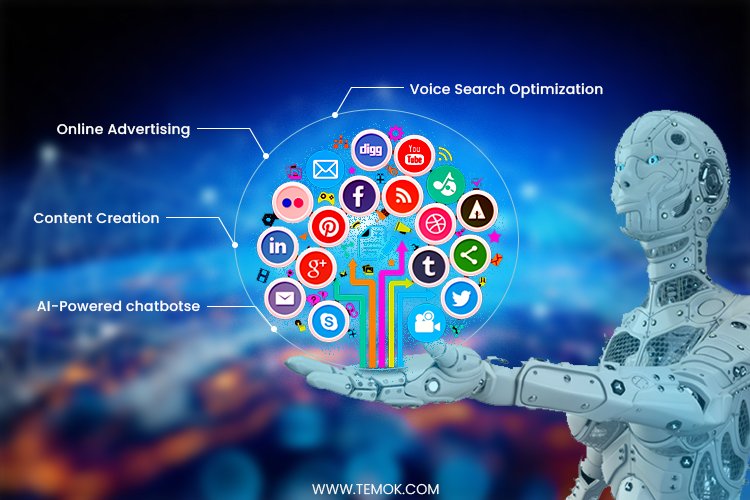
Artificial Intelligence (AI) is no longer a futuristic concept; it is a powerful reality transforming the way businesses connect with customers. In digital marketing, AI has become a game‑changer, enabling brands to understand consumer behavior, personalize experiences, automate processes, and achieve higher returns on investment. As businesses move towards data‑driven decision‑making, AI is shaping the present and future of digital marketing in remarkable ways.
For platforms like Digitalskill.tech, which focus on empowering individuals and businesses through digital skills, understanding AI’s role in digital marketing is essential. This blog explores what AI is, how it is currently used in digital marketing, and what the future holds for AI‑driven marketing strategies.
What is Artificial Intelligence?
Artificial Intelligence refers to the simulation of human intelligence in machines that are programmed to think, learn, analyze data, and make decisions. AI systems use technologies such as:
- Machine Learning (ML): Algorithms that learn from data and improve over time
- Natural Language Processing (NLP): Understanding and responding to human language
- Computer Vision: Interpreting images and videos
- Predictive Analytics: Forecasting future outcomes based on historical data
In digital marketing, these technologies work together to process massive amounts of data quickly and accurately, something that is impossible for humans to do at the same scale.
Evolution of Digital Marketing with AI
Traditional digital marketing relied heavily on manual analysis, generic campaigns, and guesswork. Marketers created ads, analyzed basic metrics, and optimized campaigns based on limited insights. With the introduction of AI, digital marketing has evolved into a smarter, faster, and more personalized ecosystem.
AI has shifted marketing from:
- Mass communication to personalized experiences
- Manual work to automation
- Reactive strategies to predictive and proactive marketing
This evolution allows businesses to reach the right audience, at the right time, with the right message.
Current Role of AI in Digital Marketing
1. Data Analysis and Customer Insights
AI can analyze vast volumes of data from websites, social media, CRM systems, and online ads. It identifies patterns in customer behavior, preferences, and purchase journeys. Marketers can use these insights to create data‑driven strategies instead of relying on assumptions.
Benefits include:
- Better audience segmentation
- Improved targeting
- Deeper understanding of customer needs
2. Personalization at Scale
Personalization is one of the strongest applications of AI in digital marketing. AI helps brands deliver personalized content, product recommendations, emails, and ads based on individual user behavior.
Examples:
- Personalized email subject lines and content
- Product recommendations on e‑commerce websites
- Customized website experiences
Personalization increases engagement, customer satisfaction, and conversion rates.
3. AI‑Powered Content Creation
AI tools can assist in generating content ideas, writing drafts, creating ad copies, designing creatives, and even producing videos. While human creativity remains essential, AI enhances productivity and consistency.
AI in content marketing helps with:
- Blog topic research
- SEO‑optimized content creation
- Social media captions and scheduling
- A/B testing of content formats
4. Search Engine Optimization (SEO)
AI plays a major role in modern SEO. Search engines use AI algorithms to understand user intent and deliver relevant results. Marketers also use AI tools to:
- Perform keyword research
- Analyze competitor strategies
- Optimize on‑page and technical SEO
- Predict ranking opportunities
AI ensures SEO strategies are aligned with changing search engine algorithms.
5. Chatbots and Conversational Marketing
AI‑powered chatbots provide instant responses to customer queries, 24/7. They improve user experience, reduce response time, and support lead generation.
Chatbots are used for:
- Customer support
- Lead qualification
- Appointment booking
- Product recommendations
This conversational approach builds trust and enhances customer engagement.
6. Paid Advertising and Campaign Optimization
AI significantly improves the performance of paid advertising campaigns. Platforms like Google Ads and social media networks use AI to optimize bidding, targeting, and ad placements.
AI helps marketers:
- Predict which ads will perform best
- Optimize budgets in real time
- Reduce cost per acquisition (CPA)
- Improve return on ad spend (ROAS)
7. Predictive Analytics
Predictive analytics uses AI to forecast future customer behavior, sales trends, and campaign outcomes. This enables marketers to plan strategies proactively.
Use cases include:
- Predicting customer lifetime value
- Identifying churn risks
- Forecasting demand and trends
The Future of AI in Digital Marketing
1. Hyper‑Personalization
The future of AI in digital marketing lies in hyper‑personalization. AI will analyze real‑time data such as location, behavior, mood, and intent to deliver highly relevant experiences.
Customers will receive:
- Real‑time personalized offers
- Dynamic website content
- Context‑aware advertisements
This will create stronger emotional connections between brands and consumers.
2. Voice Search and AI Assistants
With the growth of voice assistants, AI will play a crucial role in voice search optimization. Digital marketers will need to optimize content for conversational and voice‑based queries.
Future strategies will focus on:
- Long‑tail keywords
- Natural language content
- Local and intent‑based search optimization
3. Visual and Video Marketing with AI
AI will increasingly dominate visual and video marketing. Computer vision technology will analyze images and videos to understand user preferences.
Future applications include:
- AI‑generated videos and ads
- Automatic video editing and personalization
- Visual search optimization
4. Marketing Automation and Smart Workflows
AI will fully integrate with marketing automation tools to manage entire customer journeys automatically. From lead generation to conversion and retention, AI will optimize every touchpoint.
This will help businesses:
- Save time and resources
- Improve consistency
- Scale marketing efforts efficiently
5. Ethical AI and Data Privacy
As AI usage grows, ethical considerations and data privacy will become critical. The future of digital marketing will focus on responsible AI usage, transparency, and compliance with data protection regulations.
Brands that use AI ethically will build stronger trust and long‑term relationships with customers.
Skills Required for Future Digital Marketers
The rise of AI does not eliminate the role of marketers; instead, it transforms it. Future digital marketers must develop new skills, including:
- Understanding AI tools and platforms
- Data analysis and interpretation
- Strategic thinking
- Creativity combined with technology
- Ethical and responsible marketing practices
Institutes like Digitalskill.tech play a vital role in upskilling professionals and students to stay relevant in the AI‑driven digital world.
How Digitalskill.tech Prepares You for the AI‑Driven Future
Digitalskill.tech focuses on empowering individuals with practical, industry‑oriented digital marketing skills. By integrating AI concepts into digital marketing training, learners gain:
- Hands‑on experience with AI tools
- Knowledge of modern marketing strategies
- Real‑world application of AI in campaigns
- Career‑ready skills for the future
This approach ensures students and professionals are not just learning digital marketing, but mastering the future of digital marketing.
Conclusion
Artificial Intelligence is reshaping digital marketing at an unprecedented pace. From data analysis and personalization to automation and predictive analytics, AI is making marketing smarter, faster, and more effective. The future of digital marketing will be driven by AI‑powered strategies that focus on customer experience, ethical practices, and innovation.
For businesses and individuals, embracing AI is no longer optional—it is essential. By learning and applying AI‑based digital marketing skills through platforms like Digitalskill.tech, marketers can stay ahead of the curve, create impactful campaigns, and build sustainable success in the digital era.